Tuesday, October 23, 2012

The Perks of Being a Coming of Age Novel

By: Alex


Bildungsroman—my new favorite word.

In fancy German terms, it means ‘a coming of age story,’ which just happens to be my favorite genre of literature. Being a lover of the bildungsroman, I’ve collected many angsty novels that resonate with a certain piece of me. But one bildungsroman that is especially relevant to my life right now is Stephen Chbosky’s The Perks of Being a Wallflower.

Without difficulty, Perks captures the spirit of the bildungsroman that I love so much. Chbosky channels the overwhelming desperation that goes along with growing up through his true-to-life teen characters, who can flawlessly execute these complicated feelings.

Perks’ protagonist, Charlie, is an anxious, troubled soul beginning high school. And through his journal entries, we get an insight into Charlie’s struggles to find his place and forget about his unsettling past. Charlie’s journal takes us through his first encounters with relationships, heartbreak, drugs, abuse, suicide, and true friendship.

Charlie gives a voice to every misunderstood and troubled teen. His muted cries for help and introverted personality reveal that when you’re growing up, nothing is easy.  Charlie’s experiences are so relatable, yet so unique. I find myself feeling for Charlie’s yearning to find his place and prove himself. He embodies the conflicted element of the teenage brain, when you never know what to do, what the next step is; how it’s so hard to see your future but even more difficult to let go of a troubling past. It’s easy to be a wallflower--to be stoic and refrain from participating. To keep anxieties numb by feeling so little. But Charlie proves that those you love can make growing up a little easier.

Because of this story’s ability to describe what teenagers fear, dream and struggle with most, it remains one of my favorite novels. Chbosky understands what it means to long to escape, to become something better than yourself, and to grow up with a purpose. This book has taught me that when you’re growing up, you don’t always have to fit in. What made Charlie unique were the things that brought him the most happiness and taught him the most about himself. Seeing a character like Charlie makes me feel like I’m not so alone in a world where I feel like everyone has it all figured out and I don't. Perks provides solace for teens who just want to know there’s someone out there who understands.

Perks lends itself to the grand question of 'who am I?' and 'what do I stand for?', and it speaks to me exactly for that reason. Through his deeply personal journal entries, Charlie gives an effortlessly accurate description of the angst and desperation of growing up that goes unsaid. It’s very hard for teens to share their hardships, or even put their effusive emotions into words, but Chbosky did just that. He is a hero of the bildungsroman. This is not just a paperback book—it’s a powerful story. The story of a life. 

Sunday, October 21, 2012

Hipster Hop: The Battle Between Fly and Mainstream

By: Emily
Graphic made by Emily
The genre of rap and hip hop music isn’t all mainstream. In fact, there’s much more to rap than just Chris Brown’s obsession with women (preferably beating them) or Snoop Dogg’s undying love of weed. Granted, these are expected staples in the "popular" hip hop world, but if this is true, then hipster hop might as well be the planet Neptune.

Like music classified as "hipster," hipster hop is usually not familiar to a large audience. It's usually deemed "indie" because it cannot be found on the radio. Instead, much of hipster hop is broadcast via free mix tapes on the internet or through remixes or mash-ups.

Now as a typical white girl who covers herself in sunscreen and wears 3D glasses ironically, not many people would picture me as the type to enjoy the musical stylings of such rappers as Kanye West or Tyler, The Creator. But the reality of the situation is that these creative lyricists are, to me, geniuses of the musical world. Their rhymes are undoubtedly clever and that’s what draws me to them. In one of my personal favorite hipster hop songs, Childish Gambino says, “rappers used to laugh like I tripped and fell/Cause I don't stunt a gold cross like I Christian bail.” Like this song, called "That Power", it’s not hard to uncover a new line that might make you laugh or even think deeper than you’d have originally imagined possible.

The thing that’s so great about the hipster hop genre isn’t the fact that no one else has heard of many of the artists. It’s the fact that these rappers aren’t afraid to express their inhibitions and worries. While they may appear hard and intense on the surface, underneath their fly exterior is quite possibly the most relatable person on the planet. Kid Cudi, for example, in his super jammable hit “Soundtrack 2 My Life” says, “I’ve got some issues that nobody can see and all of these emotions are pouring out of me.”

And so I leave you with a list of just a few songs that exemplify the genre of Hipster Hop. Granted this is only a sampling of the many rappers you might discover yourself, so keep looking! And don’t be afraid of 50 Cent’s Thug Life. There are plenty of talented rappers who just want to live the normal life like you and me.
  1. That Power by Childish Gambino
  2. Teleport 2 Me, Jamie by WZRD
  3. Welcome to the Jungle by JAY-Z and Kanye West
  4. Last Name London by Theophilius London
  5. High Again by Hoodie Allen
  6. Man on the Moon by Kid Cudi
  7. 4AM Monday by Watsky
  8. Lost in the World by Kanye West and Bon Iver

Sunday, September 30, 2012

Finding Solace in Robert Walton

By: Alex

Nothing is more powerful than a moment you truly connect with someone. I’m not talking on a romantic level, but just in general. Connecting with someone who shares your beliefs or passions. You feel like a part of you that is so misunderstood is now deeply appreciated.

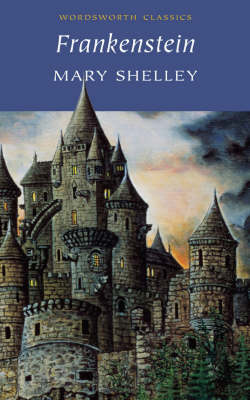
Image courtesy of Wordsworth Classics
That being said, sometimes it is hard to fulfill, or even have respect for, your dreams if you don’t have someone to connect and share with. How can you grow and prepare to reach your goals if you don’t have anyone that identifies with you? It becomes harder to open your mind and feel optimistic because you feel that no one truly believes in you.

Sometimes, it’s hard for me to explain to people exactly what I want out of life, and that can make me feel lonely. But I had a refreshing feeling when I picked up Mary Shelley’s Frankenstein for a quick read for my English class. As I began reading Robert Walton’s letters at the beginning of the book, I strangely identified with him on a on a level that I never expected. As Walton begins the story, he writes to his sister, talking about the adventures he’s going on and the dreams he has of accomplishing something much bigger than himself. At the beginning, his letters sound grand and optimistic. As a reader, I pictured Robert as this valiant character who will stop at nothing to live his dreams.

But in the second letter, I saw a deeper side of Robert. The part of his letter that resonated with me, that made me realize that I weirdly had so much in common with this 18th century male explorer, was when he said, “I have no one near me, gentle yet courageous, possessed of a cultivated as well as of a capacious mind, whose tastes are like my own, to approve or amend my plans.”

Yes, that was borderline old English. But basically what Walton is trying to tell his sister is that none of his shipmates understand his dreams. They are below him. All they know is sailing and working and sailing and working. A routine lifestyle. Robert’s dreams are bigger than theirs. And now it hurts that he can’t share them with anyone.

At that moment, I realized the truth in Walton’s character because I completely knew where he was coming from. I understood what he meant when he said he couldn’t connect with anyone, because I so often feel that way. It is so difficult to be stuck in a sea of people who just don’t understand. They can take you for surface value, but they can never connect with you on a deeper level, the level where you actually feel something.

Because I related to Walton so much, it made me a little worried. At the end of the story, Walton gives up his dreams and goes back to England. He sounds so defeated when he ends his letters with, “I am returning to England. I have lost my hopes of utility and glory;-- I have lost my friend.”

Is that what life is? You dream and dream and then you get stuck with people you can’t connect with and that forces you to give up? You work and pine and you get nothing? That idea scared me. To see the big, heroic dreamer that I loved from the beginning of the book turn into a defeated coward was very unsettling. I wanted the character I connected with to have all the glory. Because if he could do it, maybe I could too.

I feel like Robert Walton would have hung this poster in his cabin. 
I got scared and immediately thought I should find people I could connect with to keep my dreams alive. Maybe the reason why Walton lost his fervor was because he surrounded himself with men who didn’t understand him. I didn’t want to conform, and I didn’t want to loose my passion, so I struggled to find my place.

I wanted to feel that connection that I missed so much. I wanted to realize someone respected and appreciated me because they could relate to my passions. I wanted someone to know me almost as well as I knew myself. 

Well, it turns out, I still haven’t found my place. And I really don’t have many people who I think truly understand me. But that’s okay because Walton taught me that you can’t go looking for the people that are going to matter to you. No one understands your dreams as well as you do, so sometimes you have to realize things on your own. Because Walton didn’t find his place on his ship he traveled on for so long, it ended up taking his life in another direction; What I think was the right direction all along.

So, each time I struggle trying to fit in or begging people to understand what I want out of life, I realize now that it only strengthens my character. The people I meet (or do not meet) and the struggles I endure are what’s going to allow me to know myself better and guide me in my life’s direction. And I know that once I get there, I will have plenty of people to connect with, on a meaningful level, much like I did with Walton last week in the library.

Saturday, September 29, 2012

The (Less than) Amazing Spiderman

By: Emily

Art by Emily
It may seem impossible to go anywhere without hearing something about Marc Webb’s The Amazing Spiderman. Whether it be television commercials or taxicabs, it seems impossible to escape the constant and somewhat incessant promotion of the new Spiderman movie. Many were probably wondering as to why a new Spiderman movie was even being remade when less than ten years ago Tobey Maguire came swinging to theaters as the masked superhero. The writers of The Amazing Spiderman would probably claim it was because they wanted a new take on the series; A darker Spiderman for a darker time. The obvious truth about it is that Columbia Pictures knew the first Spiderman series was profitable (Sam Raimi’s three Spiderman movies raked in a whopping $2.1 billion collectively) and wanted to recreate that success. Now I don’t have a problem with wanting to make money off of a movie—after all, what is a film without profit? However, when that is your main goal and it is obvious, that’s where my problem arises.

My main qualm with The Amazing Spiderman comes from the screenplay. The writers seemed to change just enough of the story to pass it off as a new reinvented film, but not enough to claim a re-envisioned version of Spiderman. The plot was one-note and predictable, the dialogue cheesy and cliché. "We all have secrets; the ones we keep and the ones that are kept from us," broods our masked hero.

 Not to say this movie wasn’t entertaining. After moviegoers’ longtime exposure to mindless explosions and fight scenes, directors of superhero movies at this point should know how to do, if anything, excitement. Webb certainly included enough meaningless thrills to keep the audience entertained, but excessive action and mediocre use of 3D does not a good story nor a good film make.

A darker Spiderman for a darker audience needs someone who is brooding yet awkward and they seem to have found their leading man in half-British half-American all gorgeous Andrew Garfield. A relative unknown (Garfield starred as Eduardo Saverin in The Social Network among roles in other lesser-known films such as Never Let Me Go and Boy A, both of which are lovely little films, in my opinion), he lent himself nicely to the awkward and sensitive Parker. Needless to say, we’ll probably be seeing quite a bit of Garfield in the future, both in his skintight spidy-suit and out.

When it comes down to it, almost everything about The Amazing Spiderman felt contrived. I blame this partly on the shoulders of director Marc Webb. While he did not pen the atrociously predictable screenplay, some of his choices as a director felt awkward and misguided. Many encounters between Gwen and Peter (real life couple Emma Stone and Andrew Garfield) felt awkward and uncomfortable. Regardless, as long as people keep flocking to the theaters for this less than amazing film, Hollywood is sure to sign up Spiderman for a few more sequels before another reboot comes along in ten years.